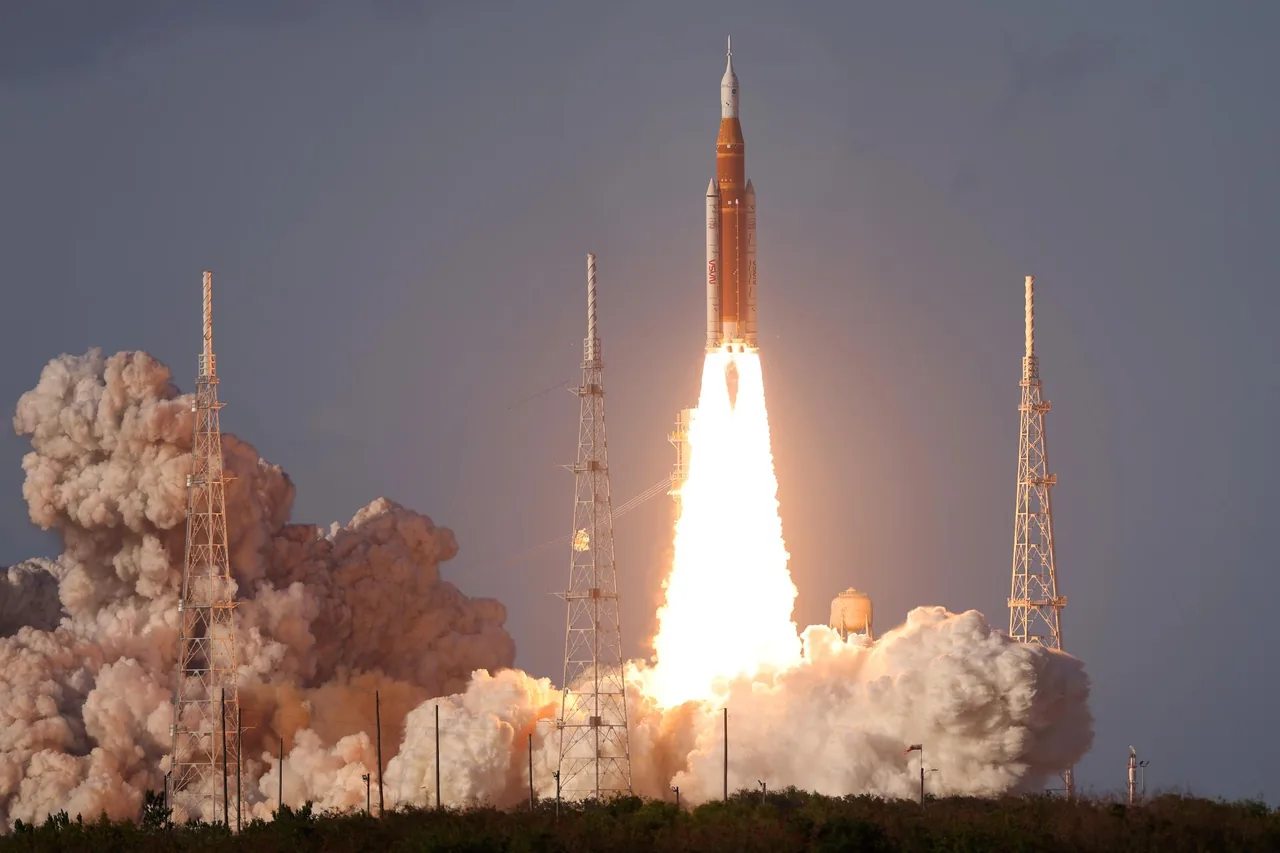
Imagery: NASA / Michael DeMocker (public domain) — Artemis II launch, 1 Apr 2026. No NASA endorsement implied.
F Space 🌌powered by MaquishTech Venture®
SpaceX & Starship Mission Tracker
A sourced record of Starship integrated flight tests, Falcon reusability, Starlink, NASA’s Artemis collaboration and Mars plans — plus a live-updatable SpaceX launch timeline. Every figure has an as-of date and a link. Nothing here is invented.
Research snapshot: 10 Nov 2026 (Asia/Calcutta). Live launch times, when the feed is up, show their own “Last updated” stamp.
Live-updatable SpaceX launch timeline
Upcoming and recent SpaceX launches are loaded from the free Launch Library 2 API, fetched on our server and cached for at least one hour. Your browser never calls the upstream API. If the feed cannot be reached, we do not invent launches — we fall back to the curated Starship timeline and label it as a snapshot.
Live schedule unavailable. Showing the curated, fact-checked Starship timeline — snapshot as of 10 Nov 2026.
We cache Launch Library 2 for at least one hour and keep the last good data when a fetch fails. Nothing on this page is fabricated to look live.
SpaceX’s own flight pages and updates are the source for every row. Integrated tests began with Flight 1 on 20 April 2023. SpaceX has also written that, as of 30 October 2025, there had been 11 Starship-only flight tests and 11 integrated flight tests of Starship and Super Heavy; Flights 12–14 in 2026 continued the integrated campaign. Outcomes are summarised, not graded as “success” or “failure” by us. Source: SpaceX — To the Moon and Beyond (30 Oct 2025) (opens in a new tab)
Flight 1
First integrated flight test
Orbital launch pad, Starbase, Texas
Liftoff succeeded; the stack reached an apogee of about 39 km, lost altitude and began to tumble. The flight termination system was commanded on both the booster and the ship.
First liftoff of a fully integrated Starship and Super Heavy from Starbase.
All 33 booster engines completed a full-duration ascent burn for the first time and the first hot-stage separation of a vehicle of this size succeeded. The booster experienced a rapid unscheduled disassembly during the boostback burn at about 90 km. The ship reached about 150 km and about 24,000 km/h (the first Starship to reach outer space) before telemetry was lost; a safe command destruct was triggered.
First full-duration 33-engine Super Heavy ascent burn.
First successful hot-stage separation at this scale.
Hot-staging and a full-duration ship ascent burn succeeded (SpaceX: first Starship to complete its full-duration ascent burn). The booster lit engines for its first landing burn, then experienced a RUD at about 462 m altitude, just under seven minutes into the flight. The ship opened and closed its payload door and began a propellant-transfer demonstration; the planned in-space Raptor relight was not attempted because of vehicle roll rates. First entry from space; last telemetry at about 49 minutes.
First Super Heavy landing-burn attempt.
Payload-door and in-space propellant-transfer demonstrations.
The booster completed a landing burn and a soft splashdown in the Gulf of Mexico at 7 minutes 24 seconds. The ship made a controlled reentry through peak heating and max dynamic pressure, then performed its first flip and landing burn since the suborbital campaign and a soft splashdown in the Indian Ocean at 1 hour 6 minutes.
First soft splashdown of Super Heavy.
First controlled Starship reentry, flip, landing burn and soft splashdown.
On the first attempt, the launch-and-catch tower (Mechazilla) caught the Super Heavy booster. The ship completed a controlled reentry, flip, landing burn and splashdown in its Indian Ocean target area. The flight ended 1 hour, 5 minutes and 40 seconds after launch.
First catch of a Super Heavy booster by the tower arms.
A catch attempt was aborted after automated health checks of critical tower hardware. The booster diverted, performed a landing burn and a soft splashdown in the Gulf of Mexico. The ship completed the first in-space relight of a single Raptor on an integrated flight, then a flip, landing burn and soft splashdown in the Indian Ocean.
First in-space Raptor relight on an integrated flight test.
Booster catch aborted by pre-planned tower health checks; soft splashdown completed.
The Super Heavy booster was caught by the tower — SpaceX’s second successful catch. The ship was lost: SpaceX identified the most probable root cause as a harmonic response several times stronger in flight than in testing, which led to propellant leaks and sustained fires in the aft “attic”. Last telemetry just over 8 minutes 20 seconds into flight.
Second successful Super Heavy catch.
Ship lost during ascent; FAA-overseen investigation.
The booster was caught by the tower — SpaceX’s third successful catch. The ship was lost after a flash near a centre Raptor sea-level engine about 5 minutes 30 seconds into the ascent burn; SpaceX identified a hardware failure in that engine that led to inadvertent propellant mixing and ignition. SpaceX stated the Flight 7 mitigations had worked as designed before this distinct failure.
Third successful Super Heavy catch.
Ship lost; distinct cause from Flight 7, per SpaceX.
First Super Heavy booster to be reflown. Ascent and hot-staging succeeded, including the first deterministic flip and boostback. A higher-angle-of-attack descent experiment (peak about 17°) preceded a landing-burn failure; SpaceX’s most probable cause was higher-than-predicted loads on the fuel transfer tube. Final booster telemetry at about 382 seconds, about 1 km altitude over the designated clear zone. The ship reached planned SECO but skipped payload deploy and an in-space burn after a main-fuel-tank pressurisation-diffuser failure (recreated in later ground testing); it reentered off-nominal and contact was lost at about 46 minutes, about 59 km over the designated Indian Ocean entry area.
First reflight of a Super Heavy booster.
Booster lost at landing burn; ship lost during reentry.
SpaceX stated that every major objective was met. The booster completed a landing burn (intentionally disabling one of three centre engines and using a middle-ring backup), hovered and splashed down. The ship deployed eight Starlink simulators (first successful Starship payload demonstration), completed the second in-space Raptor relight, then a landing flip, landing burn and soft splashdown in the Indian Ocean.
First successful Starship payload-deploy demonstration (eight Starlink simulators).
Final flight of the second-generation Starship and first-generation Super Heavy, and the final launch from the then-current Pad 1 configuration. SpaceX stated that every major objective was achieved. The booster completed a unique landing-burn profile planned for the next generation, hovered and splashed down. The ship deployed eight Starlink simulators, completed a third in-space Raptor relight, flew a dynamic banking manoeuvre to mimic a future return to Starbase, then a landing flip, landing burn and soft splashdown in the Indian Ocean.
Final Block 2 / first-generation Super Heavy integrated flight.
Third in-space Raptor relight; banking manoeuvre for a future return-to-launch-site profile.
First flight of Starship and Super Heavy V3, the first flight of Raptor 3 engines, and the first Starship flight from Pad 2. A single booster engine and a single ship vacuum engine shut down; the ship still reached its planned trajectory. The booster could not light all planned boostback engines, ended the burn early and had a hard splashdown in the Gulf after a landing-burn attempt. During coast the ship deployed all 20 Starlink simulators and two modified Starlink satellites that imaged Starship in space, then flew a flap-stress and banking experiment and executed a landing flip, landing burn and splashdown on two Raptor engines in the Indian Ocean.
Debut of Starship / Super Heavy V3, Raptor 3 and Pad 2.
First Starship flight to deploy modified Starlink satellites to image the ship in space.
Second flight of the V3 vehicles and the first Starship flight to deploy next-generation Starlink V3 satellites. The booster completed the high-thrust portion of boostback with all 33 engines (a V3 first) but ended the burn early; a subset of landing-burn engines ignited before a hard splashdown in the Gulf. The ship deployed all 20 Starlink V3 satellites, communicated with every satellite by radio and laser, and downloaded telemetry; SpaceX said the satellites were on the pre-planned trajectory and were expected to have demised on reentry about 20 minutes after deployment. A single Raptor was relit in space. After a banking manoeuvre, the ship executed a landing flip, landing burn and soft splashdown, coming to rest intact in the Indian Ocean — SpaceX’s first views of an intact heatshield after splashdown.
First deployment of Starlink V3 satellites (20), on a suborbital trajectory expected to demise.
Intact soft splashdown with the first views of an intact heatshield.
First attempt, and first success, at placing Starship in orbit, and the first delivery of a meaningful payload to orbit (26 Starlink V3 satellites). One booster engine shut down during ascent; 31 of 33 engines lit for a boostback designed to burn through remaining main-tank liquid oxygen. The booster landing burn down-selected to three engines before a Gulf splashdown; the flight-termination system was then triggered as a demonstration of the safety hardware. One ship vacuum engine shut down early; the remaining five burned longer to reach the planned passively safe suborbital trajectory. After a “go” for orbit, a single sea-level Raptor performed the first Starship orbit-insertion burn. All 26 satellites were deployed and contact was made over laser links, ground stations and Starlink user terminals. Out of caution after the ascent engine issue, the team limited time on orbit, performed Starship’s first deorbit burn, reentered, and completed a three-engine landing burn, flip and on-target splashdown in the northern Pacific.
First Starship orbit.
First operational payload to orbit: 26 Starlink V3 satellites.
First Starship deorbit burn and targeted Pacific splashdown from orbit.
Flight 15 — planned first return-to-launch-site catch of both stages
Pad 2, Starbase, Texas
This flight had not launched as of the 10 Nov 2026 snapshot. SpaceX says Flight 15 is preparing to launch as soon as 13 Nov 2026, pending regulatory approval, and is planned to be the first flight to return both Starship and Super Heavy to the launch site for catch. Planned objectives include deploying 26 Starlink V3 satellites and an approximately 22-hour, ~14-orbit mission at about 275 km, with conservative “go/no-go” gates and pre-cleared ocean abort zones. This is a plan, not a completed result.
Planned first catch of a Super Heavy V3 booster.
Planned first catch of a returning Starship upper stage.
Falcon 9 is SpaceX’s operational reusable orbital rocket; Falcon Heavy adds two reusable side boosters. Starship is designed for full and rapid reuse of both stages. The figures below mix official SpaceX statements, NASA photography of NASA missions, and Launch Library 2 catalogue totals — each labelled.
On the Flight 15 preview page, SpaceX wrote that three V1 boosters were successfully caught on earlier flight tests, with two demonstrating successful reflights (as of the Flight 15 page, checked 10 Nov 2026). The two reflights are not named on that page, so they are not identified here. Source: SpaceX — Starship Flight 15 (planned) (opens in a new tab)
SpaceX’s 7 November 2026 update describes Flight 15 as the planned first attempt to return the Starship upper stage to Starbase for a tower catch — a capability SpaceX calls a step toward recovering an entire orbital launch system. That catch had not taken place as of this snapshot. Source: SpaceX — Returning Starship to the Launch Site (7 Nov 2026) (opens in a new tab)
A 30 October 2025 SpaceX update reported the transfer of approximately five metric tons of cryogenic propellant between tanks while in space, described as a first-of-its-kind operation that informs later full-scale transfer. That is an intra-vehicle demonstration, not a confirmed ship-to-ship transfer. Source: SpaceX — To the Moon and Beyond (30 Oct 2025) (opens in a new tab)
Catalogue and press figures (not official SpaceX totals)
Live Launch Library 2 figures are unavailable. The numbers below are a snapshot taken on 10 Nov 2026 from Launch Library 2 and are labelled as a snapshot, not live data.
SpaceX launches recorded (all vehicles)
744
Catalogue successful / failed launches
729 / 15
Successful / attempted landings (catalogue)
689 / 717
Falcon 9 family launches in the catalogue (successful / failed)
698 / 4
Falcon Heavy launches in the catalogue (successful / failed)
14 / 0
As of 10 Nov 2026 (snapshot). “Successful” and “failed” are Launch Library 2 classifications and can differ from how SpaceX describes a developmental test flight — they are not used below for Starship outcomes.
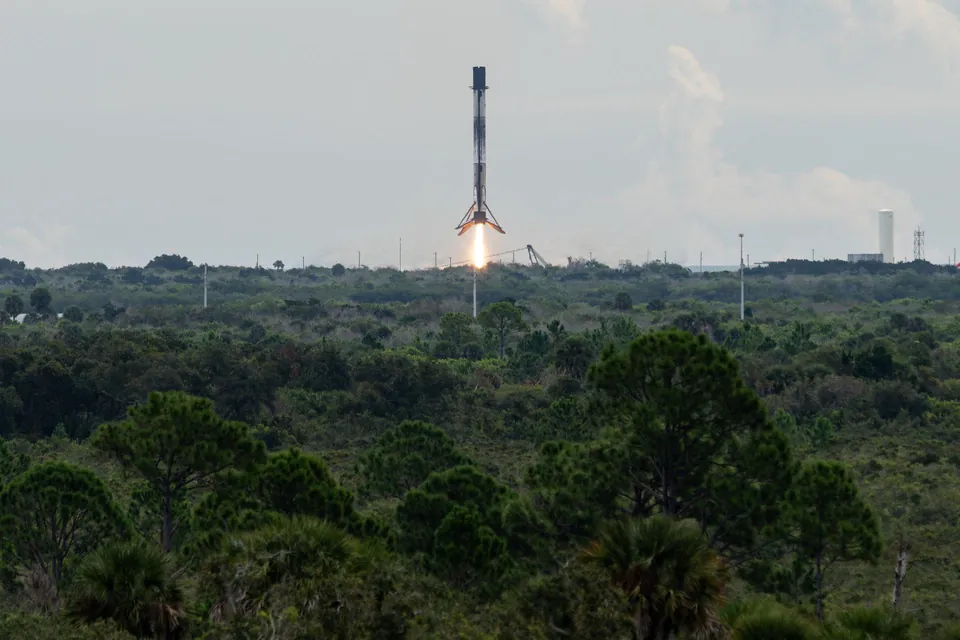
Falcon 9 landing after NASA’s SpaceX Crew-13 launch, 1 Oct 2026. Credit: NASA / John Kraus (public domain). No NASA or SpaceX endorsement implied. NASA image NHQ20261001_admin_0012.
Starlink
SpaceX does not publish a continuously updated official in-orbit headcount on a single public dashboard that we can cite for 10 November 2026. The figures below are therefore either SpaceX statements with their original dates, or an independent tracker, clearly labelled. No unsourced “current” count is shown.
Official, as of 8 Sep 2025: SpaceX wrote that the broader Starlink constellation consisted of more than 8,000 satellites, that more than 600 Starlink Direct to Cell satellites had been deployed and were operational across five continents, and that Direct to Cell was connecting over six million users. Source: SpaceX — The Future of Starlink Direct to Cell (8 Sep 2025) (opens in a new tab)
Official, as of 8 Oct 2026: SpaceX wrote that Starlink “already operates the world’s most advanced broadband network from space, serving millions of customers across the United States and around the world,” and that the FCC had approved Starlink Mobile’s Gen2 constellation application, authorising SpaceX to launch 15,000 satellites optimised for 2 GHz spectrum globally. That 15,000 figure is an authorisation, not the number of satellites then in orbit. Source: SpaceX — Building the world’s most advanced mobile network (8 Oct 2026) (opens in a new tab)
Official flight results, 2026: Flight 13 (24 Jul 2026) deployed 20 Starlink V3 satellites on a suborbital path that SpaceX said were expected to demise about 20 minutes later. Flight 14 (28 Sep 2026) deployed 26 Starlink V3 satellites to orbit — the first “meaningful payload to orbit” on Starship, with contact made over laser links, ground stations and user terminals. Source: SpaceX — Starship’s Thirteenth Flight Test (opens in a new tab) Source: SpaceX — Starship Flight 14 (opens in a new tab)
NASA Artemis collaboration and lunar landing technology
NASA and SpaceX are not the same organisation. The statements below come from NASA news releases and mission pages, or from SpaceX updates about work performed under NASA’s Human Landing System (HLS) contracts. Programme architecture has changed in 2026; older award language is kept only as history.
Artemis II launched at 6:35 p.m. on 1 April 2026 from Launch Pad 39B at NASA’s Kennedy Space Center, the first crewed Artemis flight. NASA astronauts Reid Wiseman, Victor Glover and Christina Koch, and CSA astronaut Jeremy Hansen, flew a nearly 10-day lunar flyby aboard Orion (named Integrity by the crew) and splashed down at 5:07 p.m. PDT on 10 April 2026 off the coast of San Diego. NASA later stated the crew flew 695,081 miles in total and reached 252,756 miles from Earth at their farthest point, a human distance record, with a closest lunar approach of 4,067 miles. Source: NASA — Artemis II moonfarers return to Earth (10 Apr 2026; mileage updated 7 May 2026) (opens in a new tab) Source: NASA — Artemis II mission page (opens in a new tab)
Current contract posture, as of 23 Oct 2026: NASA says it has updated its HLS contracts with Blue Origin and SpaceX. Under the original contracts, Starship HLS was assigned to Artemis III and IV, and Blue Origin’s Blue Moon Mark 2 to Artemis V. Under the realignment, both providers are participating in the Artemis III low-Earth-orbit mission, and neither lander provider has been assigned to a specific Artemis lunar landing mission. Source: NASA — Partners accelerate lander development for 2028 Moon missions (23 Oct 2026) (opens in a new tab)
Revised Starship concept of operations (NASA, 23 Oct 2026): SpaceX still plans in-space propellant aggregation with tanker and depot Starships in low Earth orbit. Under the revised operations, Starship HLS would await Orion in Earth orbit, dock there, and perform a trans-lunar injection burn to send the combined stack to low lunar orbit. NASA is working to modify Orion so Starship can push it to the Moon. An uncrewed demonstration of the aggregation approach is required before crewed landing missions. Source: NASA — Partners accelerate lander development for 2028 Moon missions (23 Oct 2026) (opens in a new tab)
SpaceX-reported HLS work, as of 30 Oct 2025: SpaceX said its HLS team had completed 49 contract milestones, including a full-scale cabin ECLSS and thermal demonstration, qualification of an androgynous docking adapter (based on the Dragon 2 system) intended to link Starship and Orion, a full-scale landing-leg drop test onto simulated lunar regolith, a Raptor lunar-landing throttle test, micrometeoroid and debris shield tests, landing software/sensor/radar demonstrations, a depot power-module demonstration, and an elevator and airlock demonstration with Axiom using flight-representative EVA suits. SpaceX also stated a design figure of more than 600 cubic metres of pressurised habitable volume and a cargo-lander design capability of up to 100 metric tons to the lunar surface — these are SpaceX design claims, not demonstrated landings. A long-duration orbital flight and a ship-to-ship propellant-transfer flight test were “targeted to take place in 2026” in that update; as of this 10 Nov 2026 snapshot we have not found an official SpaceX or NASA statement confirming that the ship-to-ship transfer has been flown, so it is not listed as completed. Source: SpaceX — To the Moon and Beyond (30 Oct 2025) (opens in a new tab)
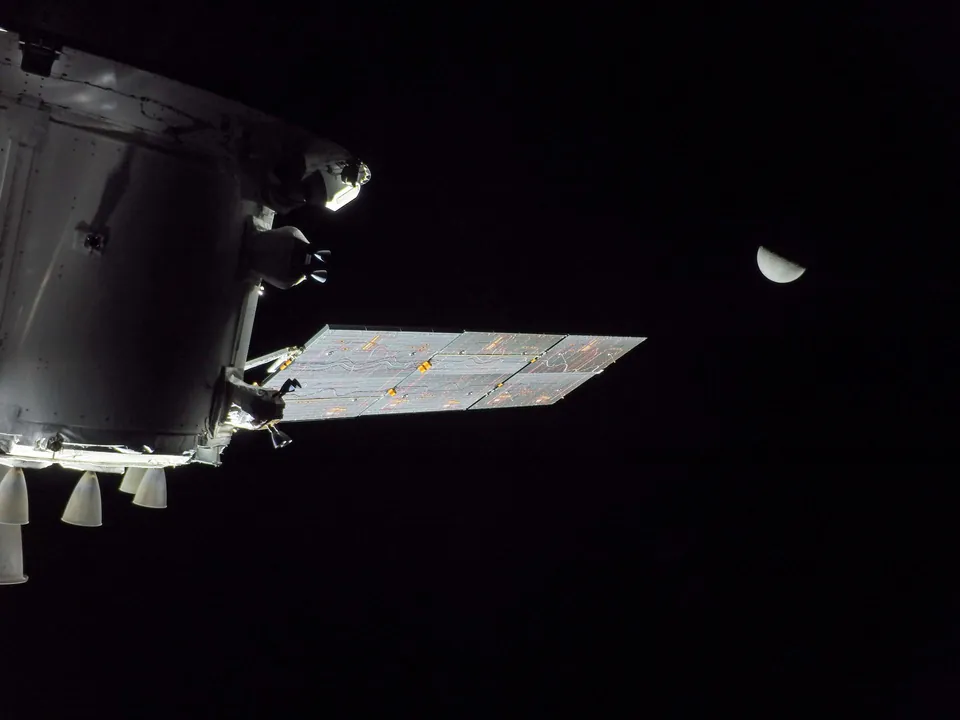
Orion and the Moon during Artemis I, 2022 (Flight Day 12). Credit: NASA (public domain). No NASA endorsement implied. NASA image art001e000669.
Mars exploration — plans, not facts of flight
SpaceX states that Starship is designed to make life multiplanetary and to carry crew and cargo to Mars. That is a company goal, not a completed interplanetary mission. Source: SpaceX Updates (opens in a new tab)
Planned commercial missions (SpaceX, 21 May 2026): SpaceX published an announcement that Chun Wang, mission commander of Fram2, “will fly aboard Starship’s first human spaceflight interplanetary missions to Mars,” described as a two-year mission that would explore outside the Earth–Moon system, fly by Mars and return to Earth. The same update said that, prior to that interplanetary mission, Chun would join Dennis and Akiko Tito on the first planned Starship commercial human spaceflight around the Moon, a week-long circumlunar fly-by planned to fly within 200 km of the lunar surface. These are announced plans. They had not been flown as of 10 Nov 2026. Source: SpaceX — First Starship interplanetary human spaceflight mission (21 May 2026) (opens in a new tab)
Dragon crew experience, as of 21 May 2026: In the same update SpaceX wrote that, since May 2020, it had “safely flown 78 crewmembers from 20 countries to and from space across 20 missions aboard Dragon, including seven commercial and private astronaut missions.” That figure is SpaceX’s, dated 21 May 2026, and is about Earth-orbit crew flights, not Mars. Source: SpaceX — First Starship interplanetary human spaceflight mission (21 May 2026) (opens in a new tab)
No uncrewed or crewed Mars arrival, landing or launch date is listed here unless an official SpaceX or NASA source states that it has happened or is formally scheduled. We have not added dates from unofficial timelines.
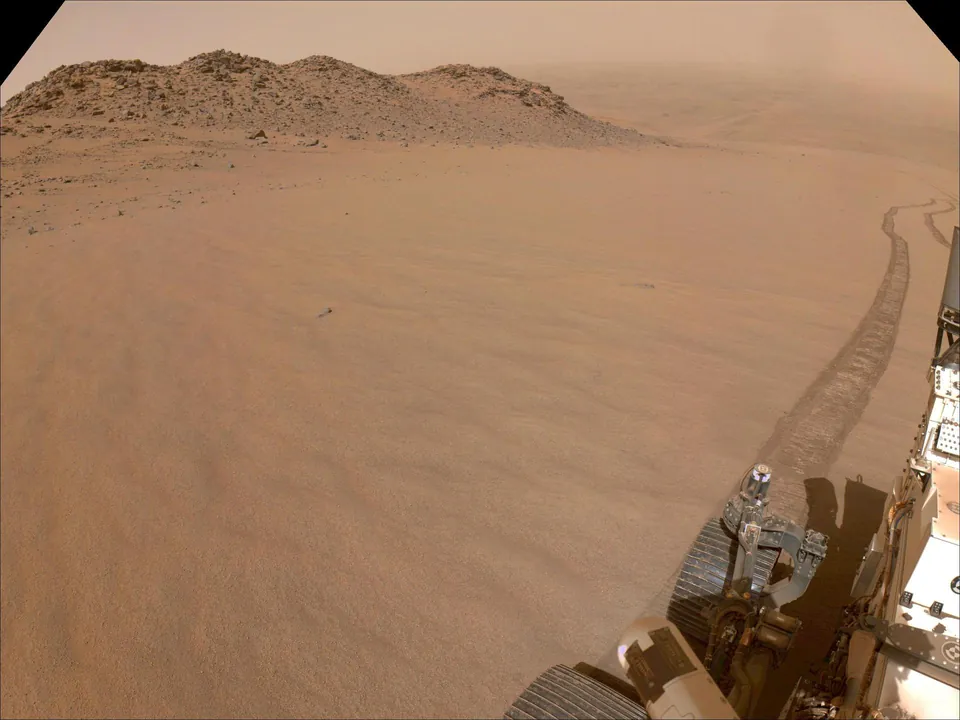
Perseverance views terrain in Jezero Crater, Mars. Credit: NASA / JPL-Caltech (public domain). No NASA or JPL endorsement implied. NASA image PIA26479.
Commercial opportunities MaquishTech Venture® can help with
As Starship, Starlink and Artemis mature, organisations will need ordinary business software on the ground: data pipelines, analytics, CRM, secure portals and operations dashboards. These are opportunity areas, not claims of current contracts, clients, revenue or market size. MaquishTech Venture® works on ground-side and business systems only — not flight software, payloads, on-board systems or launch operations.
AI for space-adjacent teams
Practical assistants and automations for proposals, support and reporting, and pipelines that bring together licensed Earth-observation data, CRM and operations data. Human review stays in the loop. We do not claim to run mission control or onboard autonomy.
Robotics on the ground
Software around terrestrial test, warehouse and inspection workflows — tracking, dashboards and secure document flows for teams that already operate their own hardware. We do not build flight or surface robots.
Satellite analytics
Browser-based maps, alerts and reports on open or licensed Earth-observation data that you are entitled to use (for example Copernicus or Landsat, or imagery you already licence). Every source is attributed. We do not resell or redistribute primary imagery.
Interplanetary logistics (ground systems)
CRM, supplier and parts portals, shipment and milestone tracking, and leadership dashboards for organisations planning lunar or deep-space logistics. This is business software on Earth, not a transportation service to the Moon or Mars.
Tell us the problem. We’ll scope the build.
Free consultation by email: send us your requirement and a senior consultant replies within 1 business day.
All photographs on this page were downloaded from the NASA Image and Video Library, optimised locally to WebP, and are used under NASA’s media guidelines: NASA still images, audio and video are generally not copyrighted, NASA is credited, and no NASA endorsement is implied. SpaceX-copyrighted photographs are not used or hotlinked. Source: NASA media usage guidelines (opens in a new tab)
Reusable rockets — Falcon 9 landing, 1 October 2026
NASA / John Kraus, “Falcon 9 Landing Following NASA’s SpaceX Crew-13 Launch,” NASA ID NHQ20261001_admin_0012. Public domain. Depicts a NASA mission; no SpaceX licence is required for this NASA still.
Artemis — Orion and the Moon, 2022
NASA, Artemis I Flight Day 12, NASA ID art001e000669. Public domain.
Mars — Perseverance in Jezero Crater
NASA / JPL-Caltech, NASA ID PIA26479. Public domain. No JPL endorsement implied.
Open Graph image
A 1200×630 crop of the Artemis II launch still above, prepared for sharing. Same credit and licence.
Disclaimer
This is an independent informational page published by MaquishTech Venture® Pvt Ltd under its F Space 🌌 brand. It is not affiliated with, endorsed by, authorised by or a partner of SpaceX, NASA, the FAA, the Canadian Space Agency, Blue Origin, Axiom Space, The Space Devs, Jonathan McDowell, or any other agency, company or person named here. SpaceX, Starship, Super Heavy, Falcon, Starlink, Dragon, Mechazilla and related marks are trademarks of Space Exploration Technologies Corp. NASA, Artemis, Orion, SLS and related marks are trademarks or names of the U.S. Government. Other names are used only to identify their owners. Launch times and statuses can change. This page is not for operational, navigation or safety use. Facts were checked against the linked official or primary sources for a snapshot dated 10 Nov 2026; live Launch Library 2 figures, when shown, carry their own update time in IST.
Salesforce, Zoho and Google Ads marks are trademarks of their respective owners (Salesforce, Inc.; Zoho Corporation Private Limited and/or its affiliates; Google LLC); used for identification only, no endorsement implied. We are not a Google Partner.
We use essential cookies to run this site. With your permission we also use
analytics cookies (to measure visits) and advertising cookies, including for
ads personalisation and conversion measurement by Google.
You can change or withdraw your choice at any time via “Cookie settings” in the footer.
Cookie Policy ·
Privacy Policy ·
How Google uses data
Existing client? Weekend support
Thanks — request received.
We'll confirm your Google Meet time by email.
Call us free
Free video or voice call from any country, scheduled in your time zone.